
Your Aer Dorsal MAS.
How to wear it, clean it and change the fins, the morning positioner, the Snore Attack Shield, and the important information to read first.
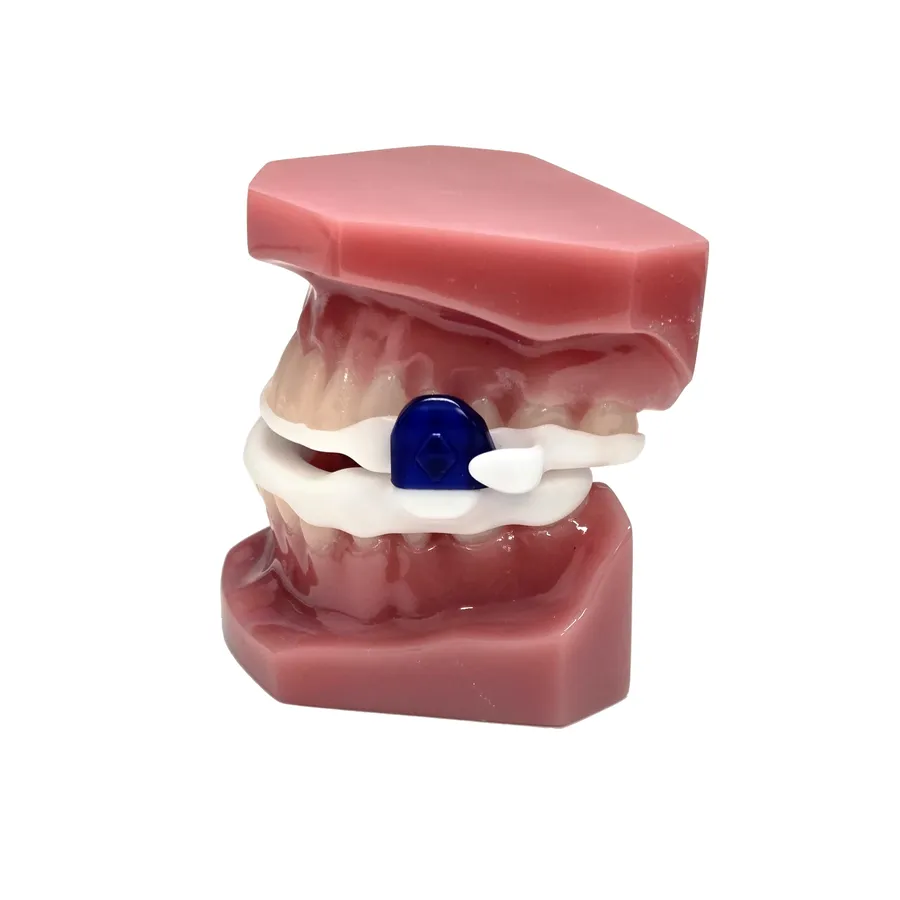
In your pack
- Upper and lower custom trays, with one pair of fins
- Snore Attack Shield
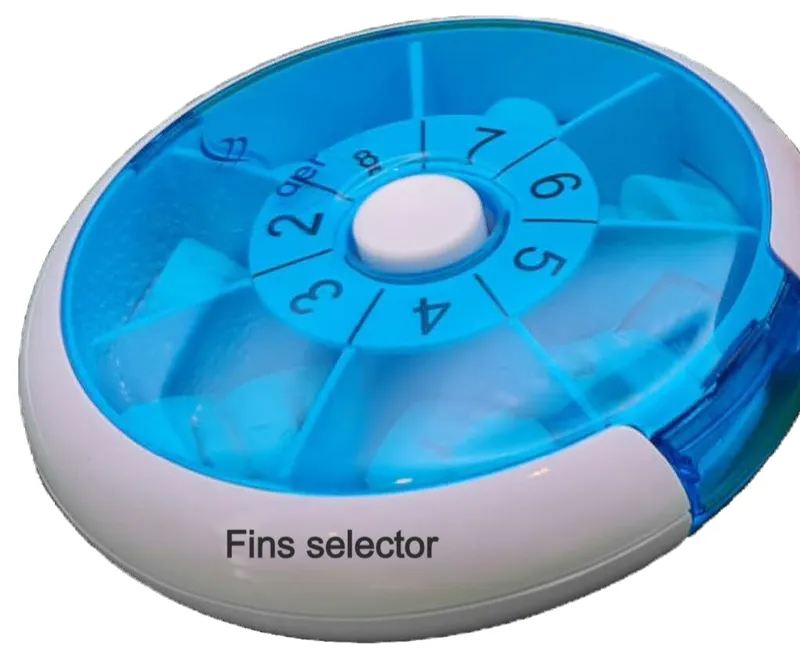
- Fin selector: a container with 7 sets of fins
- Cleaning bath and Snore Attack Cleaning Tablets
- Morning positioner
- A spare pair of lock pins
Quick start
What do I do every day?
- Check the appliance before each use. Are the fin lock pins in place?
- Put the top tray on your top teeth first.
- Then put the bottom tray in while you push your bottom jaw out a little.
- Don't wear the trays on their own.
Only take the fins off to clean under them. It's a prescribed device: only change the fin size on your dental professional's advice.
How do I clean the Aer Dorsal?
- Clean it every day, with fresh water and cleaner every day.
- We recommend Snore Attack Cleaning Tablets. If a product isn't proven to clean nylon appliances properly, don't use it.
- Rinse it under running water to remove the night's saliva.
- Soak it in cool, clean water and cleaner, all day, every day.
If the appliance gets dirty, it isn't being cleaned every day and soaked all day. There is no warranty for dirty devices.
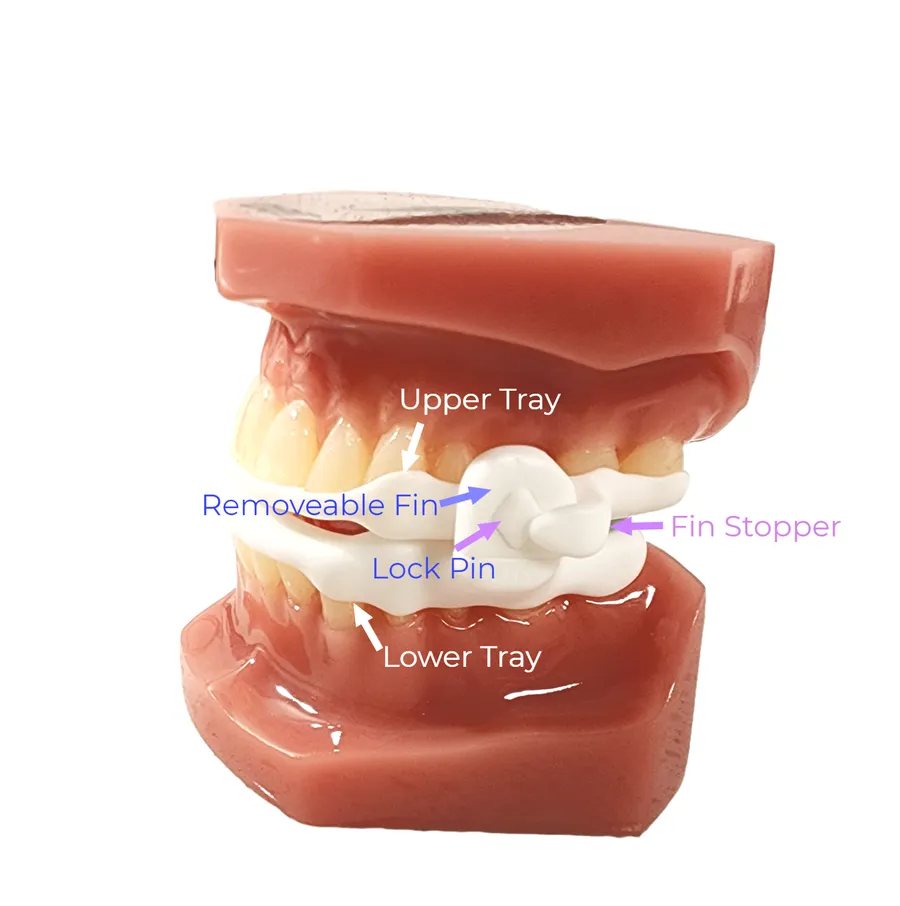
Changing and cleaning under the fins
Clean under the fins once a month.
Taking the fins off
- Take the lock pins out of the fins first. Push the lock pin out, then pinch it with your fingers and pull it out of the device.
- Pinch the fin and pull it off the support frame. You'll feel it pop as it comes away.
- Push the lock pins back into the keyhole in the fins before you put them in the cleaning bath, so they don't go down the drain when you empty it.
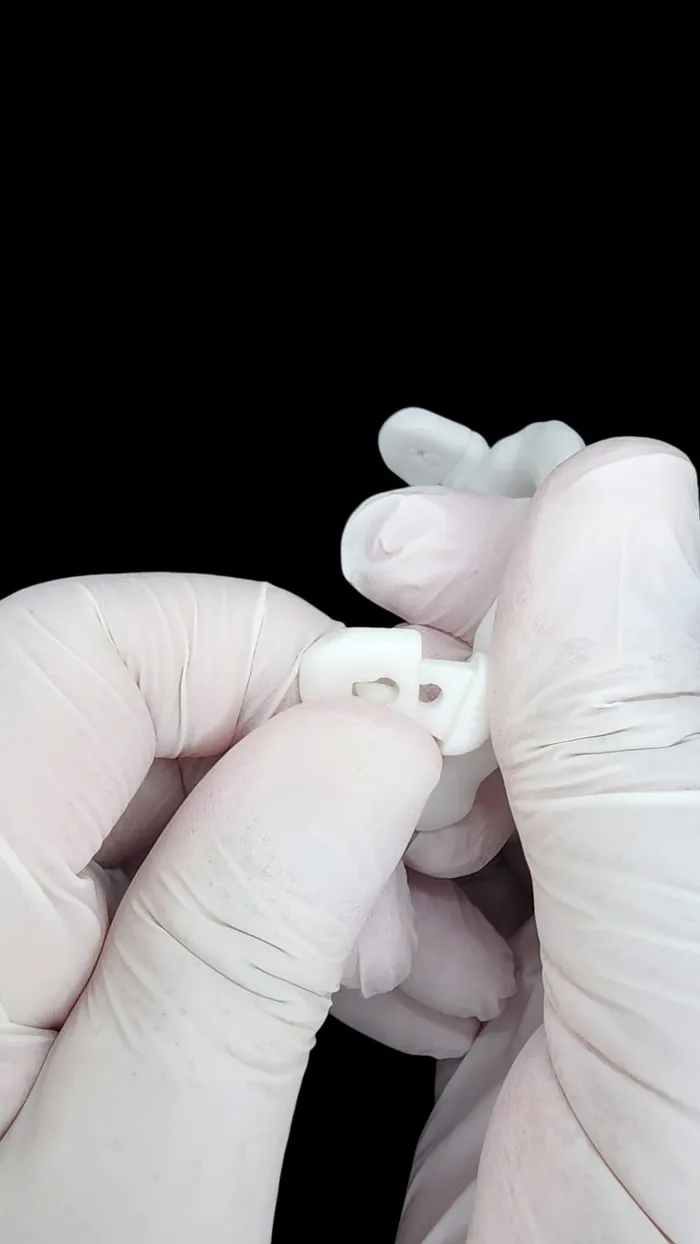
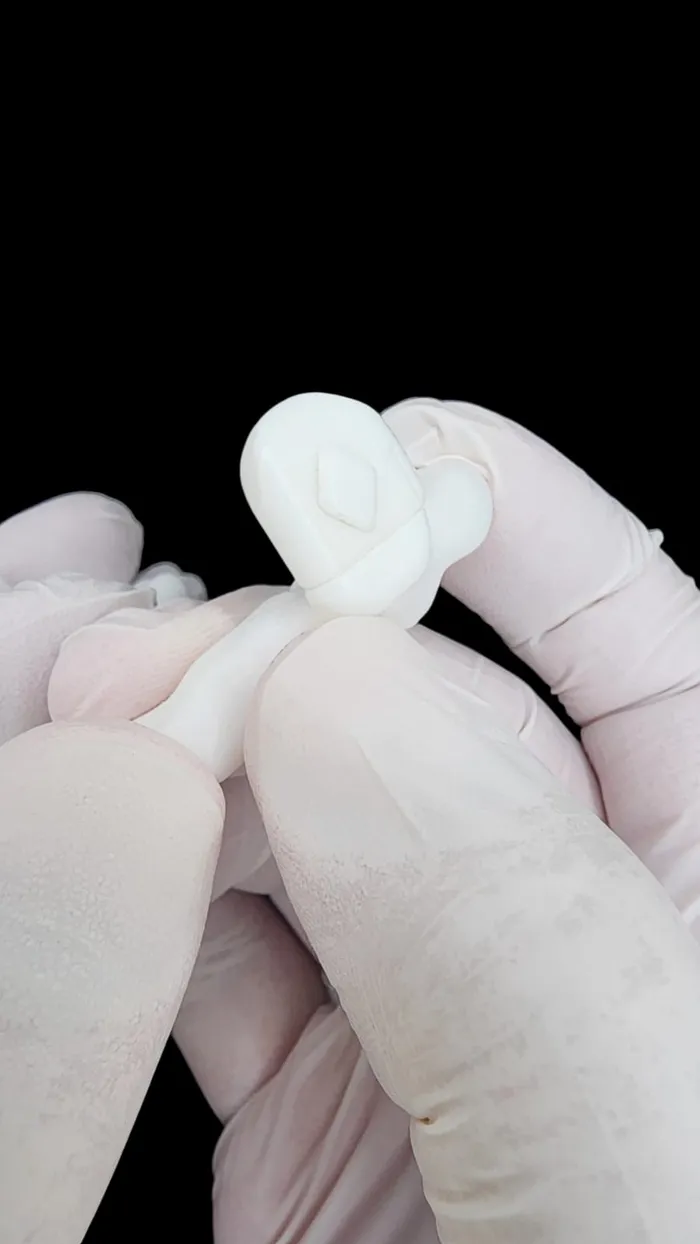
Putting the fins back on
- Once the device is clean, take the lock pins out of the fins again.
- Put the fin on the support frame and push down until it clicks into place. Fins are marked L for the left side of your mouth and R for the right.
- Push the lock pin back into the keyhole in the fin, from the outside towards the centre of the device, all the way in. Lock pins fit either side.
Never use the device without the lock pins in place. Buy lock pins.
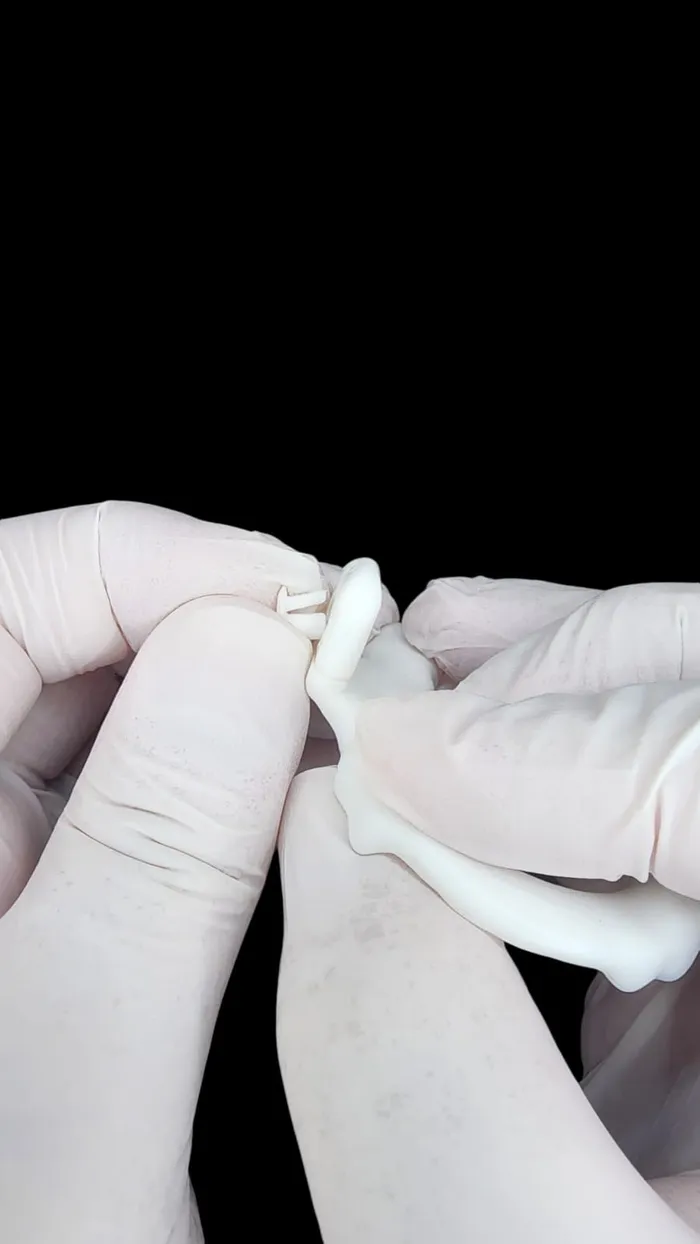
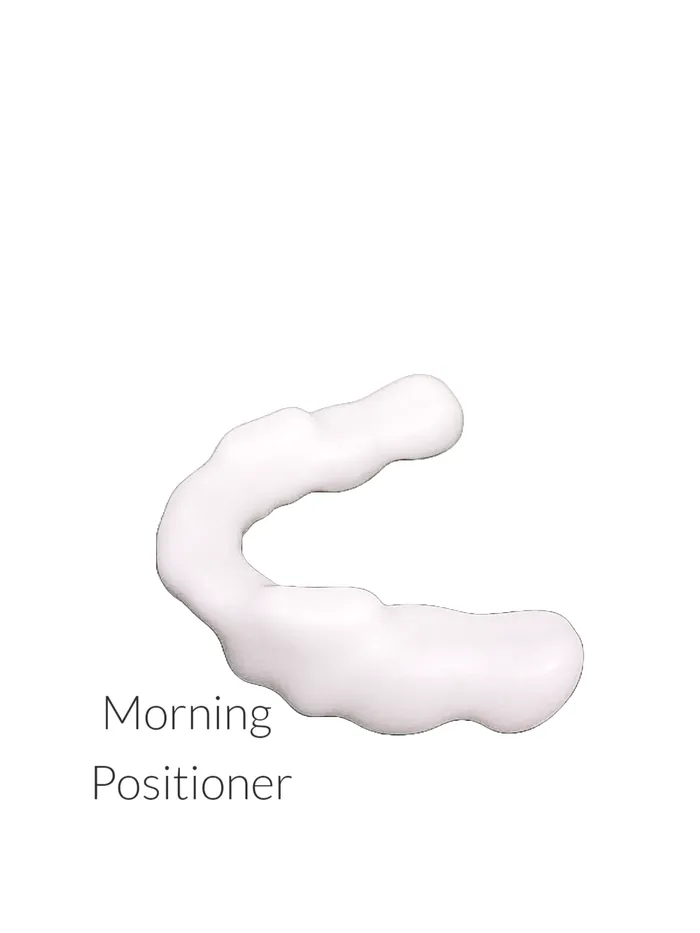
The morning positioner
Ten minutes every morning towards better bite health.
After a night with your lower jaw held forward, the positioner gently wakes up the muscles and ligaments that draw it back. The exercises help your jaw return to a comfortable bite for the day.*
Do them in the morning while you're still in bed. Try waking 10 minutes earlier to fit them in.
- Take out the Snore Attack Shield, then the bottom and top trays of your appliance.
- Put the morning positioner in your mouth, on your bottom teeth.
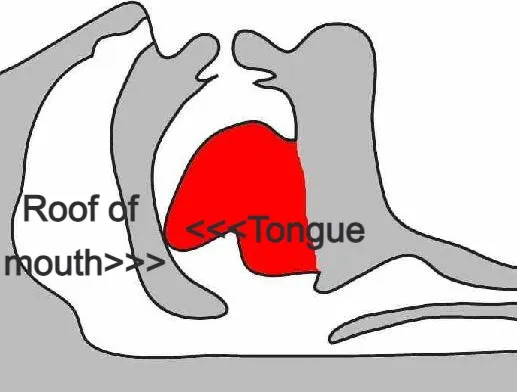
- Put the tip of your tongue up and as far back on the roof of your mouth as you can. Hold it there and close your teeth together.
- Relax your tongue, keeping your mouth firmly closed in this position.
- Clench your teeth as hard as you can in this position. Hold the clench until it becomes slightly uncomfortable. Some discomfort in your muscles is normal.
- When you can't hold it any longer, ease the clench slightly while trying to slide your lower jaw further back. Then clench again as hard as you can comfortably manage.
- After a couple of clenches, relax your muscles: open your mouth as wide as you can and wiggle your lower jaw gently from side to side. Don't hurt yourself.
- Repeat steps 3 to 7 for 10 minutes every morning.
Questions about the exercises? Ask the dental practitioner who provided your Aer Dorsal.
*Your normal overjet and overbite can be affected by several things, such as how far the appliance brings your lower jaw forward, the vertical height set in the appliance, and factors particular to you, including the health of your jaw joint and how your upper and lower jaws relate. Sentinel Sleep makes no warranty or guarantee of a normal overjet and overbite. Any bite change should be managed by you and your treating dentist. Sentinel Sleep makes no warranty or guarantee on behalf of the treating dentist about the appliance's effect on your bite. The morning positioner is not warranted to fully correct a bite change, or to correct it in any sense.
The Snore Attack Shield
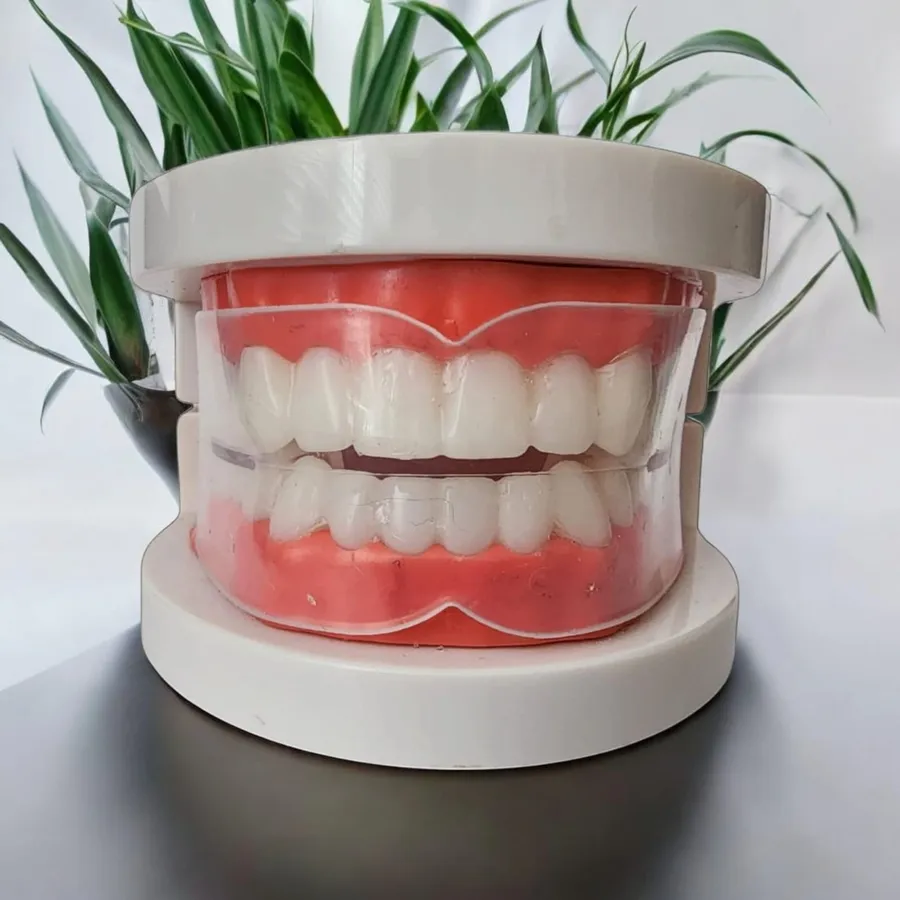
A tongue posturing device. The shield sits behind your lips, in front of your teeth and your Aer Dorsal, and helps you keep your mouth closed and breathe through your nose.
The square tabs on the shield hold it still while you wear an Aer Dorsal. You'll need to cut them down to suit where the fins sit on your appliance; the video below shows how.
How to put it in
- Put the upper and lower parts of your Aer Dorsal in your mouth.
- Put the shield into the gap behind your lips and cheeks, in front of your teeth and your Aer Dorsal.
- Slide the shield down one side of your teeth until you can slide the other end into your mouth, behind your lips.
- Tuck the edges of the shield behind your cheeks, in front of your teeth and appliance, and swallow gently until you feel suction in the roof of your mouth.
- Check your tongue posture: tongue up against the roof of your mouth, and your soft palate relaxed against the back of your tongue.
Trimming the shield
If the tabs get in the way of your appliance, cut them down with a sharp pair of scissors. If the shield is too long, trim the edges the same way. Be careful not to make a hole in the shield.
Important information
Please read this carefully. It has the warnings and answers you need before you use your Aer Dorsal.
Your dentist has decided this is the most appropriate therapy for you, after a sleep physician recommended it as one of your options following your sleep study.
The Aer Dorsal is a 3D laser-sintered appliance, custom designed and made for your mouth. It's durable and strong. It holds your lower jaw forward to make more room for your tongue at night, and the Snore Attack Shield supports that position for your tongue.
Is it comfortable and easy to use?
Yes. The Aer Dorsal is sleek and slim, so it isn't bulky in your mouth. Follow your dental professional's instructions on using it each day.
Do I need follow-up appointments?
See your dental professional every year, or sooner if you need to, for a review. Do not use this device if you haven't seen a dentist in over 12 months.
Can I use a different cleaner instead of Snore Attack Cleaning Tablets?
We recommend Snore Attack Cleaning Tablets because they're the best cleaner we've found for nylon appliances, after many hours of researching and testing. If you choose another cleaner, or don't clean the device every day as recommended, Sentinel Sleep can't support a warranty claim for a dirty or damaged device.
Will it damage my teeth and bite?
Your dental professional will check the health of your teeth and show you how to use the device. Damage to teeth won't be caused by this product: the material can't damage teeth, so as long as your teeth are sound nothing should happen. Your bite may feel different in the morning. This is temporary and should settle on its own. If it lasts longer than an hour, your dental professional will suggest using the morning positioner.
I have some missing teeth. Will this affect it?
You need at least 8 natural teeth, sound and healthy, in the lower arch. The device can be used by people with lower teeth and no upper teeth. Implants in the lower arch can hold the device where there aren't enough teeth.
I'm about to have dental work. Will it affect the fit?
Ask your dental professional. If the work is substantial, the top or bottom tray may need to be remade, and a fee applies. This isn't covered by warranty.
My jaw feels sore. What should I do?
If you have muscle or jaw pain, stop using the device straight away and contact your dental professional.
There's blood on the device in the morning. What should I do?
It may be a sign your teeth and gums need a professional clean. Talk to your dentist about keeping your teeth and gums healthy. Don't let the blood dry on the device: rinse it well and soak it with a Snore Attack Cleaning Tablet as directed.
My Aer Dorsal is damaged. What should I do?
Stop using it straight away and see your dental professional.
I've lost all my lock pins. Can I keep using it?
Do not use the device without the lock pins in place, at any time, for any reason. Buy new lock pins.
With the Snore Attack Shield in, I can't breathe through my mouth.
Any oral appliance can block breathing through your mouth. The shield, with your Aer Dorsal, retrains you to breathe only through your nose. Make sure you can breathe through your nose before you use it.
My nose feels too small with the shield in, even though it's clear.
Sometimes the front of the nose collapses as you breathe in at night. Nasal cones or strips can help. Buy nasal cones.
Warnings
- Read all the instructions before using your Aer Dorsal.
- The Aer Dorsal is intended to reduce or relieve night-time snoring and OSA. If symptoms, breathing difficulties or other respiratory disorders exist or continue, with or without the device, contact your dental professional immediately.
- Use the Aer Dorsal only as directed. Don't misuse it: only wear it while sleeping.
- The Aer Dorsal should only be provided by a dentist, and only fitted by a dental professional working with that dentist who has the scope to fit such an appliance under the dentist's supervision and guidance.
- Don't store or transport it outside the temperature range of minus 20 to 50 degrees Celsius.
- Stop using it if it's uncomfortable, and see your dental professional.
- Don't use it if you can't remove it yourself.
- Don't use it if it becomes damaged or doesn't fit properly; see your dental professional.
- Don't use it if you're vomiting or feeling nauseous.
- Don't store it in direct sunlight.
- Its operating temperature range is 5 to 40 degrees Celsius.
- If you think you're having an allergic reaction to it, stop using it immediately and see your dental professional, who may direct you to a medical doctor.
Possible side effects
These side effects aren't common. If you have any of them, see your dental professional straight away.
- Slight discomfort in the teeth or gums from the pressure of the appliance, and soreness in the jaw joint (temporomandibular joint).
- Extra saliva, which improves as you get used to wearing it.
- Slight jaw soreness or tightness at first, and after adjustments.
- A temporary change in your bite.
- Difficulty breathing through your mouth.
- Taking the appliance out in your sleep without realising.
- Pain in the jaw joint.
- A permanent change in your bite.
Contraindications
This device is contraindicated for people who:
- have central sleep apnoea
- have severe respiratory disorders
- have loose teeth or advanced periodontal disease
- are under 18 years of age.
Dentists should consider the patient's medical history, including but not limited to asthma, breathing or respiratory disorders, or any other relevant health problems, and refer the patient to the right medical practitioner before recommending this device. This device is only to be prescribed by a medical sleep professional.
Words you'll see
- OSA
- Obstructive sleep apnoea.
- MAS
- Mandibular advancement splint.
- Bite
- The way your teeth meet when your jaws are in their normal position.